Pulse Oximeter Guide: How a 50-Year-Old Invention Became Your Most Trusted Home Medical Device
A licensed pharmacist's complete guide to one of the most quietly revolutionary devices in modern medicine — its history, accurate use, and when its readings should send you to a doctor.
Written and medically reviewed by Muhammad Aqeel Akram, Licensed Pharmacist (RPh) — Rxall Healthcare. Last updated May 18, 2026. Verified by Rxall Healthcare's clinical review process.
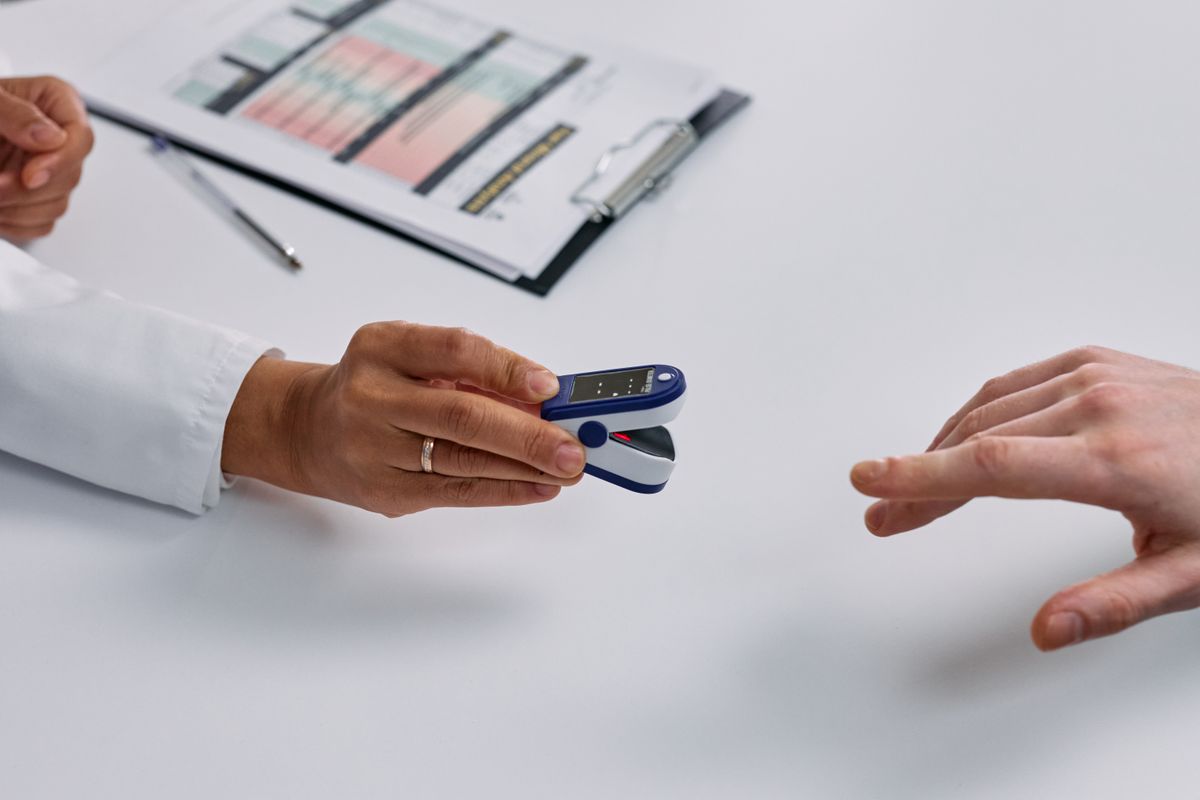
A modern fingertip pulse oximeter — small enough to fit in a pocket, sensitive enough to detect a problem most patients would otherwise miss.
The pulse oximeter is the quietest revolution in modern medicine. No larger than a clothes peg, it clips onto a fingertip and reads — within seconds — how much oxygen the blood is carrying and how fast the heart is beating. For most of the twentieth century, that information could only be obtained by drawing a sample of arterial blood and sending it to a laboratory. Today, a child can hold the device, and a grandmother in her bedroom can know in real time whether her lungs are doing their work. It is one of the few medical technologies whose accuracy in the home approaches what hospitals once relied upon in their intensive care wards.
The story begins in 1974, when a Japanese bioengineer named Takuo Aoyagi, working at Nihon Kohden Corporation, discovered that the absorption of red and infrared light through living tissue could be used to calculate the percentage of haemoglobin saturated with oxygen. The reading came to be known as SpO₂. By the 1980s, the principle had been miniaturised into the bedside oximeters used in surgery and recovery rooms. By the 1990s, paediatricians, cardiologists, and emergency physicians depended on it. And in 2020, when respiratory illness swept across the world, the same small device — once confined to hospitals — became a household item in nearly every country on earth.
How a Pulse Oximeter Actually Works
Two beams of light — one red, one infrared — pass through the fingertip from the device's emitter to its sensor on the opposite side. Oxygen-rich haemoglobin absorbs infrared light more strongly; oxygen-poor haemoglobin absorbs red light more strongly. By comparing the two signals as your pulse pushes fresh blood through the capillaries, the device calculates the percentage of haemoglobin currently carrying oxygen. A healthy reading at sea level falls between 95% and 100%. A reading below 92% in a person who is not a known chronic lung patient is a signal that the lungs are not delivering oxygen properly, and it warrants prompt medical attention.
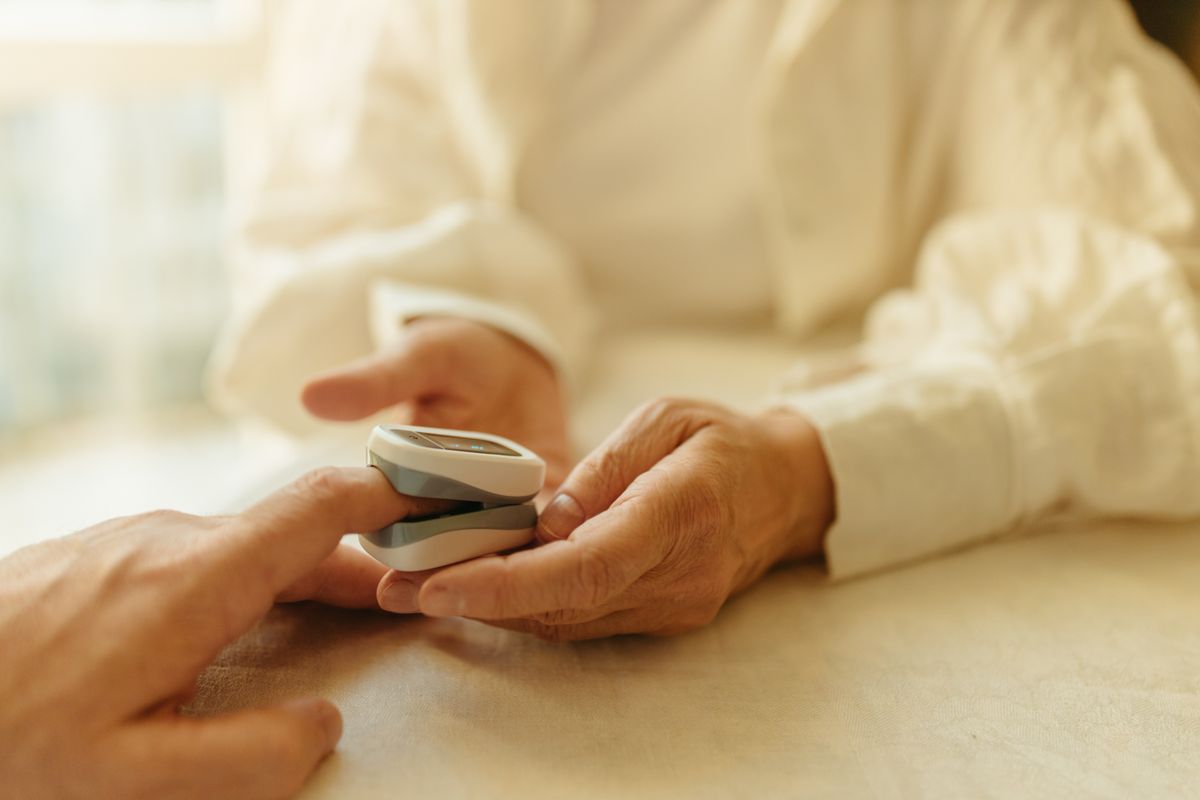
Home use of vital-sign devices has grown into one of the largest segments of consumer healthcare — but accuracy depends entirely on technique.
Using It Correctly — Where Most People Go Wrong
A pulse oximeter is only as accurate as the conditions in which it is used, and most home readings that look alarming turn out, on review with a pharmacist, to be measurement errors rather than medical emergencies. The most common mistakes are these. Nail polish, especially dark colours, blocks the light path and produces falsely low readings; remove it before measuring. Cold hands reduce circulation in the fingertip, and the device cannot read a pulse it cannot feel — warm the hands first by rubbing them together for a minute. Movement during measurement scrambles the signal; sit still, with the hand resting on a table, for at least thirty seconds before recording the reading. And finally, poor circulation, anaemia, or very dark skin pigmentation can all affect accuracy at the margins — a fact acknowledged by the U.S. Food and Drug Administration in its 2021 safety communication, which advised that readings should always be interpreted in the context of how the patient actually feels and looks.
When a Reading Demands a Doctor's Call
The single most useful rule we share with patients at Rxall Healthcare is this: do not panic at a single low reading, but do not ignore a pattern. If two consecutive measurements, taken five minutes apart with proper technique, show SpO₂ at or below 92% in a healthy adult — or at or below 88% in a known COPD patient — that is the threshold at which medical advice should be sought without delay. Equally important are the accompanying signs: shortness of breath at rest, bluish discolouration of the lips or fingertips, confusion, or chest pain. These symptoms outweigh any number on the screen. A normal SpO₂ reading does not rule out illness, and a low reading without symptoms in a calm, warm patient should be re-checked before alarm.
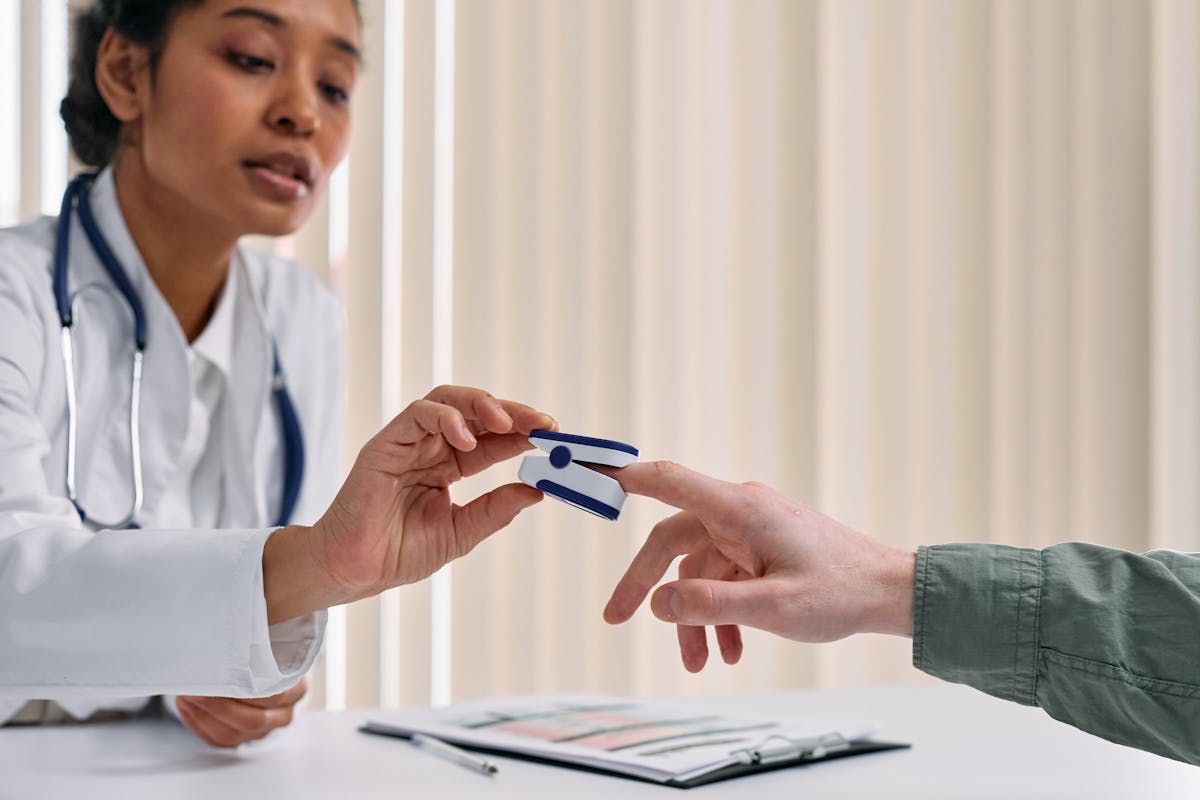
A two-minute conversation with a pharmacist is often the difference between a panicked midnight hospital visit and a calm, correct reading at home.
Choosing a Pulse Oximeter — What Actually Matters
Hundreds of pulse oximeter brands now sell online for a few thousand rupees, and not all of them are reliable. Three quiet markers separate a serious medical device from a novelty: the presence of a recognised regulatory clearance (CE mark for Europe, FDA registration for the United States, DRAP registration for Pakistan), a clearly stated measurement range and accuracy specification (typically ±2% for SpO₂ between 70–100%), and a manufacturer whose name can be traced to a real address and service contact. Devices that lack all three should be treated as decorative, not clinical. For our patients we routinely verify medical devices through our Verification Hub, and pharmacist guidance on home device selection is also covered in our Pharmacist Guide.
The Pulse Oximeter — the short version
Half a century after Takuo Aoyagi's quiet discovery, the pulse oximeter has become the most useful medical device most households will ever own — provided the people using it understand its language. Used well, it is an early-warning system that can prompt timely care; used poorly, it is a source of unnecessary alarm. At Rxall Healthcare, our standing offer to every patient who buys one from us is the same: bring it to the counter, and a licensed pharmacist will spend the time needed to teach you how to use it, what your normal range looks like, and exactly when a reading should make you pick up the phone. That two-minute conversation — old-fashioned, unhurried, human — is the part no device can replace.
🏥 Trusted Healthcare with Rxall Drug Mart
At Rxall Drug Mart, we prioritize your health and well-being. Whether you need authentic medicines, verified medical devices, or professional pharmacy advice, we've got you covered.
- 🛒 Shop Online: Visit rxalldrugmart.odoo.com for a seamless shopping experience.
- 📖 More Health Guides: Read our latest updates at Rxall Healthcare Blog.
- 🔬 Verify Your Device: Use our Verification Hub to confirm medical device authenticity.
- 📞 Order via Call / WhatsApp: 0345-5192345
Author: Muhammad Aqeel Akram, Licensed Pharmacist (RPh) — Rxall Healthcare. Reviewed: May 18, 2026.
This article is for educational purposes only and does not replace personal medical advice. For specific health concerns, consult your physician or our pharmacist team.

Comments
Post a Comment